Wednesday, June 3, 2020

MY CO-EMPLOYEE INTENTIONALLY COUGHED ON ME AT WORK. CAN I SUE HIM OR MY EMPLOYER?

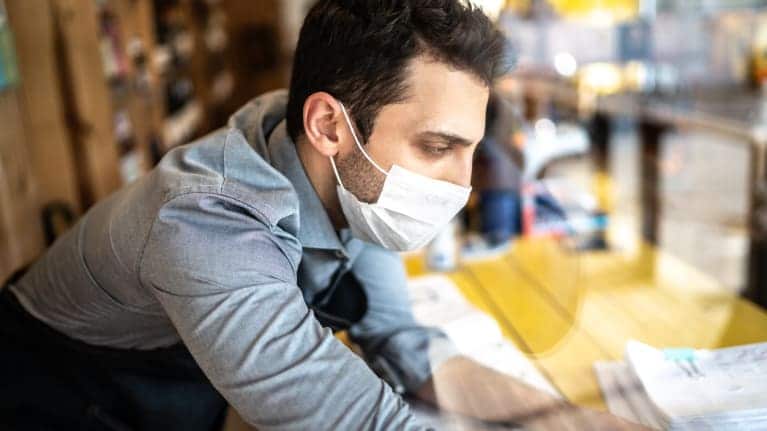
photo of a man wearing a mask during pandemic at workRe-entering the work force after weeks turning into months in quarantine, there is the rising potential for new forms of harassment in the workplace. One such form is the intentional spreading of germs by co-employees. It may be that people have become so estranged from decorum and boundaries after sheltering in place in close proximity with friends, roommates, or family, or it may be the case that cabin fever has left some people a little crazed. In either event, what can be done if a co-employee intentionally coughs on you at work?

To start, it is the responsibility of employers to ensure the safety of their job sites. In doing this, employers must follow the guidelines set out by their state and local governments. Employees should be pre-screened before coming to work, and upon entry to the workplace, temperatures should be taken to prohibit those with fevers and symptoms of COVID-19 from entering the workplace. Employees should maintain a distance of six feet from one another as much as possible while working in order to avoid the potential for spreading germs. Further, if an employer is informed of an employee’s contraction or diagnosis of COVID-19, it is the duty of the employer not to inform the rest of his employees that there has been a diagnosis, but to warn of the potential for exposure. Because of HIPPA guidelines, an employer cannot reveal that there has been a diagnosis or the identity of the potential source of future spread.[1]

In this vein, employers are required by the OSHA General Duty Clause to provide employees with a workplace free from recognized hazards, such as exposure to COVID-19. This means employers are obligated to provide the means by which to prevent such exposure. While there is no clear standard across the board for the method of prevention, it is generally accepted that employers should provide protection that is proportional to the type of work performed, i.e., healthcare providers require greater levels of protection as compared to those working the retail sector. [2] The common consensus, however, is that all workers should be wearing face masks to cover noses and mouths because the virus mainly spreads from person to person via the respiratory system, in addition to the virus being transmitted by high-contact surfaces.[3] It is common during this time of heightened caution that employees feel their employers could be doing more to prevent the spread of infectious diseases. But if an employer is following every guideline of the CDC and OSHA to the letter, the employer is fully compliant and not in the wrong.[4]

You may be wondering what to do if you believe you contracted the virus while on the worksite. There is the possibility you have a workers’ compensation claim for being exposed to the contamination. However, the biggest obstacle you will face is how you came into contact with the contamination and the point in time when you contracted COVID-19. Proving this to any degree of certainty tough because the coronavirus is a novel disease of which much information remains unknown. The good news is that, as an employee, you do not have to prove your employer did anything wrong for you to recover under workers’ compensation. Every guideline could be in place and every employee in a face mask, but you can still recover on your claim as long as the workplace is the source of exposure.[5] Any illness requiring hospitalization or continuing treatment for three or more days, according to the Family and Medical Leave Act, may qualify as a serious health condition which provides between twelve and twenty six weeks of leave.[6]

Knowledge and proactiveness is the best form of pretention, but you should know your options in the case your exposure is not of your own doing.  Please wear a mask, wash your hands frequently and practice social distancing. Remember, there is the possibility that you have already contracted COVID-19 and are an asymptomatic carrier who can spread the virus despite not showing symptoms. Always conduct yourself as if you have COVID-19 so that you do not infect others.

If you are hurt on the job due to unsafe working conditions, seek legal counsel, as you may be entitled to workers’ compensation or other benefits. As we have since 1967, we will continue to protect the legal rights of our clients – those who are hurt on the job while working for Alabama employers.  If you have been injured on the job and want to learn your rights, please consider contacting the Nomberg Law Firm. Our office number is 205-930-6900.


[1]https://edis.ifas.ufl.edu/fs351#:~:text=%2D%20Employers%20need%20to%20follow,department%20for%20additional%20guidance..

[2] https://www.kiplinger.com/article/business/T012-C032-S014-covid-19-at-work-your-legal-rights.html.

[3] https://www.cdc.gov/coronavirus/2019-ncov/prevent-getting-sick/how-covid-spreads.html.

[4] https://www.kiplinger.com/article/business/T012-C032-S014-covid-19-at-work-your-legal-rights.html.

[5] https://hrdailyadvisor.blr.com/2009/09/18/what-to-do-when-contagious-illnesses-come-to-work/.

[6] https://hr.blr.com/HR-topics/Benefits-Leave/FMLA-Leave-of-Absence.


Bernard D. Nomberg has been a lawyer for more than 20 years. Bernard has earned an AV rating from Martindale-Hubbell’s peer-review rating. In 2019, Bernard was named a Super Lawyer for the 7th year in a row.


from The Nomberg Law Firm – Birmingham Workers' Compensation & Personal Injury Lawyers https://www.nomberglaw.com/blog/my-co-employee-coughed-on-me-at-work-can-i-sue-him-or-my-employer/

Friday, May 15, 2020

COVID-19 AND BANKRUPTCY – THE NEW PANDEMIC

covid 19 submarine on top of coins to represent financial hardshipShelter-in-place, COVID-19, pandemic, telecommuting . . . these are terms we, as a nation, are inundated with each and every day. The current state of life as we know it is constantly debated, and it seems nothing else can truly break us out of the intense focus trained on the present. But what is to come in the months ahead? The potential consequences for social distancing and furloughed or terminated employment must join these topics for discussion. With the number of Americans filing for unemployment sky rocketing, the knowledge of just how to handle a personal financial crisis is of the highest importance.
The first thing to note is the option to file for bankruptcy should be a last resort. This is not because of any stigma attached to the filing but because relief opportunities are prevalent during this pandemic. Look first to your ability to make the minimum payments on all of your bills and stay current for as long as possible. If this plan of optimistically hoping to tough out the current season seems out of reach, turn next to working out settlement plans with your lenders. Congress’s latest $2 trillion CARES relief package allows homeowners to take advantage of a 180-day forbearance on their mortgage payments, while also preventing foreclosure on federally backed loans. As for credit card, student loan, and auto loan payments, numerous larger banks are offering assistance to borrowers struggling to make payments.[1] The imperative thing is to begin to take action first. Do not wait to automatically be enrolled in a relief program; call each lender and make note of the content of your conversation, the representative with which you spoke, and the offer extended for each interaction. By being proactive, you may be able to avoid filing for bankruptcy.[2]

If the settlement or relief program options are still insufficient, then you should next consider filing for bankruptcy. There are two types: Chapter 7 and Chapter 13. Each has a different process and filing fee. Chapter 7 proceedings are advisable for borrowers with a larger amount of debt which cannot reasonably be paid off, or even a significant portion which cannot be paid off. In these proceedings, assets of the borrower are sold off to pay the debt owed. Assets sold include second cars, vacation homes, stocks, collections and bonds. The general goal of this process is to completely eliminate the borrower’s debt. A judge has to approve the borrower’s filing in court, which costs from anywhere between $300 to $350 to file and $1,500 to $2,000 in legal fees, and the entirety of the process usually lasts three to five months. While in Chapter 13 proceedings, the goal is to make debt more manageable by forming a consolidated repayment plan, approved by the court. This process does not sell assets but instead reorganizes debt to make the borrower’s income sufficient to pay off the debt over a specified time. This process generally lasts three to five years and can cost $300 to $350 for the filing fee and $2,500 to $3,500 in attorney’s fees, due to the prolonged management of this type of proceeding.[3]

It is important to think through all of your options. Once you file for bankruptcy there is a waiting period before you can file again. Talk with a lawyer who can advise you best on which route is best for you.

If you are hurt on the job due to unsafe working conditions, seek legal counsel, as you may be entitled to workers’ compensation or other benefits. As we have since 1967, we will continue to protect the legal rights of our clients – those who are hurt on the job while working for Alabama employers.  If you have been injured on the job and want to learn your rights, please consider contacting the Nomberg Law Firm. Our office number is 205-930-6900.


[1] https://www.cnbc.com/2020/03/20/what-banks-are-doing-to-help-americans-affected-by-coronavirus.html.

[2] https://www.cnbc.com/2020/04/16/what-to-know-if-coronavirus-has-you-considering-filing-for-bankruptcy.html.

[3] Id.


Bernard D. Nomberg has been a lawyer for more than 20 years. Bernard has earned an AV rating from Martindale-Hubbell’s peer-review rating. In 2019, Bernard was named a Super Lawyer for the 7th year in a row.


from The Nomberg Law Firm – Birmingham Workers' Compensation & Personal Injury Lawyers https://www.nomberglaw.com/blog/covid-19-and-bankruptcy-the-new-pandemic/

Sunday, April 19, 2020

Social Security, Disability, and COVID-19 oh my!

These are unprecedented times we are experiencing as a country. Grocery stores are social distancing land mines, true “essentials” are being defined, and the long-debated question of which meetings could have been emails has finally been answered. While it is important that we maintain levity during this pandemic, there are still serious inquiries that are imperative to answer. One such question concerns the impact coronavirus will have on social security payments.

According to the Social Security Administration, payments will be continued during quarantine. While local Social Security offices are closed to the public, the SSA consistently updates their website to keep beneficiaries informed. The most valued information found on the website being economic impact payment. “Social Security retirement, survivors, or disability beneficiaries and Supplemental Security Income (SSI) recipients who do not have qualifying children under age 17” will automatically receive the $1,200 from the economic impact program via direct deposit, Direct Express debit card, or paper check. Those beneficiaries that have qualifying children under the age of 17 and did not file an income tax return for 2018 or 2019, or those that are new beneficiaries since January 1, 2020 who did not file a tax return for 2018 or 2019, will not receive automatic payment and must go to the IRS’s website to enter information in order to receive their funds in addition to $500 per dependent child.[i]

It is of value to remember that some will take advantage of people through scams during this time of uncertainty. If you receive a call or email or some other form of communication threatening suspension of benefits due to office closure, do not respond. Benefits will still be dispersed even when we’re stuck at home.

If you are hurt on the job due to unsafe working conditions, seek legal counsel, as you may be entitled to workers’ compensation or other benefits. As we have since 1967, we will continue to protect the legal rights of our clients – those who are hurt on the job while working for Alabama employers.  If you have been injured on the job and want to learn your rights, please consider contacting the Nomberg Law Firm. Our office number is 205-930-6900.


[1] https://www.wivb.com/news/national/social-security-commissioner-says-benefits-will-still-be-paid-during-pandemic/.

[2] https://www.ssa.gov/coronavirus/.

“website” hyperlink:  https://www.ssa.gov


Bernard D. Nomberg has been a lawyer for more than 20 years. Bernard has earned an AV rating from Martindale-Hubbell’s peer-review rating. In 2019, Bernard was named a Super Lawyer for the 7th year in a row.


from The Nomberg Law Firm – Birmingham Workers' Compensation & Personal Injury Lawyers https://www.nomberglaw.com/blog/social-security-disability-and-covid-19/

Wednesday, April 15, 2020

I ALWAYS FEEL LIKE SOMEBODY’S WATCHING ME

electronic communications spying act[1]

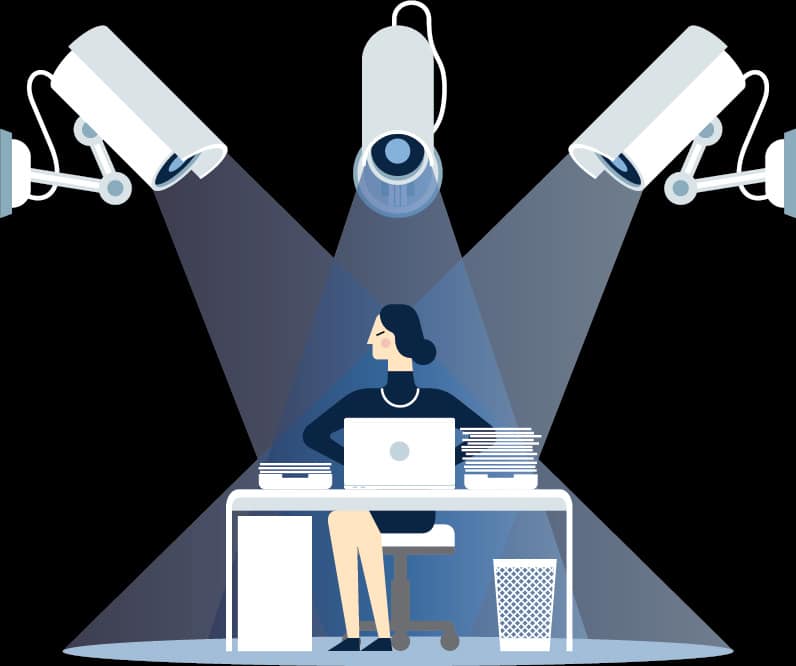
With the rise of the digital age and social media, employees’ personal lives are rapidly becoming an online experience. With Twitter, Facebook, and Instagram, these web-based, online lives can be accessed anywhere at any time. The eventuality that employees may blur the lines between company time and personal engagements with these social media platforms is the justification given by employers for monitoring employees in the workplace. One study conducted by OfficeTeam found that employees spend nearly eight hours weekly on activities unrelated to their employment duties, which results in a loss of 15 billion dollars to businesses yearly.[2] While this statistic may be rational in justifying an employer’s actions, it is still imperative that you, the employee, know your rights when it comes to being monitored in the workplace.

In Alabama, it is legal for an employer to monitor almost everything employees do at work so long as the employer has an important business reason for doing so that outweighs an employee’s right to privacy. These methods of monitoring employees can include, but certainly is not limited to, reading postal mail and email, installing surveillance cameras, GPS tracking, and monitoring phone and computer activity. Studies show that at least eighty percent of large companies utilize some form of monitoring of employees’ emails, phone calls, and internet use.[3] With such a large percentage of companies taking advantage of this permission, the question must be asked … where does the law draw the line?

The Electronics Communications Privacy Act (ECPA) provides that employers cannot legally listen in on phone calls in the workplace that are personal in nature. Further, companies must notify their employees that they will be monitored by video camera. If a company plans to utilize concealed surveillance cameras, these cameras can only be placed in areas that are not zones where you would rationally expect privacy, such as locker rooms, bathrooms, and breakrooms. The key to drawing the line is to think what is personal and, therefore, private.[4] Past this point, however, guidelines become fuzzy and indistinct.

Employers have the ability to record employees, without their consent, or even knowledge, so long as the camera is visible. Conversations such as those made in-person, on phone calls, or video chats can be recorded with the consent of only one party in Alabama, and that one party can be the employer that makes the record. Personal conversations can even be monitored if it is the company policy that personal calls are not to be made on company time. Postal mail that is not marked “confidential” or “personal” is also up for an employer’s review, so long as there is an important business purpose for reading it. Finally, anything that is a company asset, like a phone, computer, or car, is subject to GPS tracking at the employer’s discretion.[5]

With almost everything done on company time coming within the grasp of your boss’s hands, the best way to protect your privacy is to check your personal life in the parking lot before clocking in.

If you are hurt on the job due to unsafe working conditions, seek legal counsel, as you may be entitled to workers’ compensation or other benefits. As we have since 1967, we will continue to protect the legal rights of our clients – those who are hurt on the job while working for Alabama employers.  If you have been injured on the job and want to learn your rights, please consider contacting the Nomberg Law Firm. Our office number is 205-930-6900.


[1] https://www.utahbusiness.com/workplace-spying/.

[2] https://abc3340.com/news/abc-3340-news-iteam/is-your-boss-spying-on-you-know-your-rights-when-it-comes-to-workplace-privacy.

[3] https://www.worktime.com/is-it-legal-to-monitor-employees-without-their-knowledge-law.

[4] https://www.utahbusiness.com/workplace-spying/

[5] https://www.alabamacivilrightslawyer.com/employee-rights/surveillance?agree=yes.


Bernard D. Nomberg has been a lawyer for more than 20 years. Bernard has earned an AV rating from Martindale-Hubbell’s peer-review rating. In 2019, Bernard was named a Super Lawyer for the 7th year in a row.


from The Nomberg Law Firm – Birmingham Workers' Compensation & Personal Injury Lawyers https://www.nomberglaw.com/blog/electronic-communications-spying-act/

Monday, March 30, 2020

CAN I BLAME MY JOB FOR COVID-19?

photo of people in business attire wearing medical masks

If you turn on any news channel today, or at any point lately, it seems we are constantly inundated with a minute by minute account of updates to the pandemic now called COVID-19. Nonessential businesses are closing, people are locking themselves in their homes, and the ability to easily find necessary items is a distant memory. While questions of how the virus will affect hourly workers, the economy, and students unable to attend school on campus are among the topics covering the air waves, a real concern yet unaddressed is whether contracting the coronavirus is potentially compensable by workers’ compensation… until now. Here is the information any employee hoping for a compensable claim should consider before filing a claim.

According to Alabama Code § 25-5-110, an “occupational disease” that is compensable by workers’ compensation is one “arising out of and in the course of employment.” It is due to “hazards in excess of those ordinarily incident to employment in general and is peculiar to the occupation in which the employee is engaged but without regard to negligence or fault.”[1] This means, the employee has the burden of proving that the disease contracted was “caused or aggravated by the nature of the employment.”[2]

The normal reaction to reading this standard is to wonder how any person could rationally trace the source of their contracting a virus back to the workplace. While one (morbid) spot of hope could be a fellow employee also diagnosed as positive for the virus, it is more probable that this will not be the case. In such situation, we look to previous litigations of infections and viral diseases for potential avenues of proving the employee’s claim.

One such case is Hyster Co. v. Chandler, in which a worker recovered compensation for his lung disease resulting from his working conditions. The reason this particular case succeeded is because a surgeon was able to look at the worker’s lungs during surgery and observe first-hand the scarring of the lungs due specifically to exposure to foreign substances to the body. From this personal observation and knowledge of the excessive dust at the workman’s jobsite, the surgeon was able to testify in court that the lung damage and subsequent disease was directly caused by the conditions of his employment, which resulted in an award of workers’ compensation.[3]

While the Hyster case was a success, the striking difference between that outcome and a potential COVID-19 claim is that the virus is not caused by a substance readily visible to the human eye. The virus can stay airborne for three hours and live on surfaces for as long as three days.[4]  Workers that come into contact with the public are certainly at greater risk for exposure than people that are quarantined. Certain jobs, like doctors, nurses, healthcare workers, first responders, and grocery store employees require more interaction with people, increasing the likelihood for infection. Preparation is so important for avoiding exposure to COVID-19.

We have written other blogs and created videos addressing various concerns about COVID-19 and employment. Please click here for videos: https://bit.ly/2QEndsM and here for blogs: https://bit.ly/2UhuP6E.

For updated information from the Centers for Disease Control and Prevention: http://bit.ly/2vONj55

If you are hurt on the job due to unsafe working conditions, seek legal counsel, as you may be entitled to workers’ compensation or other benefits. As we have since 1967, we will continue to protect the legal rights of our clients – those who are hurt on the job while working for Alabama employers.  If you have been injured on the job and want to learn your rights, please consider contacting the Nomberg Law Firm. Our office number is 205-930-6900 and website www.nomberglaw.com. Our office is located in Birmingham, Alabama. We handle cases throughout our great State.

Bernard D. Nomberg has been a lawyer for more than 20 years. Bernard has earned an AV rating from Martindale-Hubbell’s peer-review rating. In 2019, Bernard was named a Super Lawyer for the 7th year in a row.


[1] (1975).

[2] Alatex, Inc. v. Couch, 449 So.2d 1254, 1257 (Ala. Civ. App. 1984).

[3] Hyster Co. v. Chandler, 461 So.2d 828, 830-31 (Ala. Civ. App. 1984).

[4] https://www.health.harvard.edu/diseases-and-conditions/coronavirus-resource-center.


from The Nomberg Law Firm – Birmingham Workers' Compensation & Personal Injury Lawyers https://www.nomberglaw.com/blog/can-i-blame-my-job-for-covid-19/

Monday, March 9, 2020

AN ALABAMA EMPLOYER FAQ ON COVID-19 (CORONAVIRUS), AS OF MARCH 9, 2020.

close up shot of corona virusAlabama reported no known COVID-19 cases as of this weekend, however, it is becoming apparent that the time for preparation for a pandemic is starting to end, and the time for action items is beginning. To that end, it seems that many law firms are starting to compile answers to some frequently asked questions.

With Spring Break Plans On the Immediate Horizon, Can I Prohibit Employees from Traveling?

No. But employers can ask where the employee has traveled, and if the employee has traveled to an area designed Level 3 by the CDC, ask the employee to self-isolate upon return. This guidance, however, now has to be tempered by the fact that new cases are popping up every day in the United States and this will continue to multiply exponentially. So, while this guidance sounds good today, ask again in a week or two or three.

If I Think An Employee May Have COVID-19, What Can I Do?

You can do a few things. For example, you can ask if the employee has symptoms such as fever or a dry cough. You can also direct those employees who have virus-like symptoms or who are at high risk for infection (they live in a house where someone else has it) to go home.

If I Get a Confirmed Case of an Employee Having COVID-19, Can I Do Anything Then?

Certainly, you can tell the employee that they are not allowed to work and require the employee to provide medical documentation clearing them to work. If they can work from home, you can allow it. You can also tell other employees that they may have been exposed to COVID-19 though you should still try to keep confidential the identity of the person. Employers may also wish to inform co-workers in close contact with the sick worker that they should stay home for 14 days of self-isolation too to minimize the risk of further spread in the workplace. Ask the sick worker about all of the close contacts he or she has had so you can do contact tracing.

Can I Tell Employees to Just Stay Home if They Are Sick or Have a Fever?

Yes. The situation arises regarding whether the employee will be paid during that time, whether that time off is attributed to vacation or other paid time off. Companies are struggling with a response here; Trader Joe’s just offered more flexibility for employees in such cases. Each employer will have to find the right answer for itself. The CDC advises that you can require an employee to be fever and symptom free for 24 hours. Consider a temporary suspension on your illness policy; yes, there may be an employee who will abuse this but a generous policy can potentially stop a serious outbreak within your company.

If the Situation in the United States Worsens, Do Some Rules Change with a Pandemic?

Probably. The EEOC has advised, for example, that taking the temperature of all employees may violate the ADA under some circumstances, but has indicated that the rules may change during a pandemic such that the illness may pose a “direct threat” to others. As the EEOC has stated:

“During a pandemic, employers should rely on the latest CDC and state or local public health assessments. While the EEOC recognizes that public health recommendations may change during a crisis and differ between states, employers are expected to make their best efforts to obtain public health advice that is contemporaneous and appropriate for their location, and to make reasonable assessments of conditions in their workplace based on this information.”

As of March 8, 2020, a pandemic has not been “declared” though several states such as New York have already declared states of emergency. Employers should be cautious for now but this has the potential to change very quickly.

Can I Require Employees to Implement Infection Control Procedures, Like Mandatory Hand-Washing?

Yes. As I’ve also noted before, employers do have the obligation to provide a reasonably safe workplace. So, you should be encouraging employees to take such measures too. Here are ten songs you can encourage employees to sing too. http://bit.ly/33eTAn7

Are There Any Alabama Resources To Be Aware Of?

Yes, the Alabama Department of Public Health has launched a website here. http://bit.ly/38z5Kbq. For the latest on COVID-19, visit http://bit.ly/2vONj55. The Alabama Department of Public Health can now test for coronavirus at the state laboratory. The ADPH Bureau of Clinical Laboratories began testing for COVID-19, the illness caused by coronavirus, on March 5. Physicians have also been provided guidance for specific testing criteria. To contact the ADPH http://bit.ly/2xj9y3q. Every indication is that the COVID-19 outbreak will get considerably worse before it gets better. One need only look to Italy for such an example. Employers need to be ready now to act.

If you find this information helpful, please feel free to share.

(NOTE: A special thanks to Daniel Schwartz with the Connecticut Employment Law Blog.)


Bernard D. Nomberg has been a lawyer for more than 20 years. Bernard has earned an AV rating from Martindale-Hubbell’s peer-review rating. In 2019, Bernard was named a Super Lawyer for the 7th year in a row.


from The Nomberg Law Firm – Birmingham Workers' Compensation & Personal Injury Lawyers https://www.nomberglaw.com/blog/an-alabama-employer-faq-on-covid-19-coronavirus/

CORONAVIRUS AND THE WORKPLACE

[1]
Everyone’s eyes seem to be glued to the news lately for updates and alerts on what is happening with the Coronavirus now. Yet what do we really know about it and what can we do to make sure we never experience it up close and personal?

Now called COVID-19, the Coronavirus was first diagnosed in Wuhan, China in December. This odd name actually derives from the word corona meaning “crown,” and is based on the appearance of the spikes on the virus’s surface. The common type of coronavirus causes only mild to moderate upper respiratory symptoms, like a common cold, while a more severe type causes pneumonia and death. While this virus is commonly found in animals, some forms can mutate and transfer to people, as was the case with most of the original cases in China when specialists traced the virus back to an animal market in Wuhan, China. Mutating and transferring viruses sound like the stuff of movies, but the important piece of information to glean is how the virus is transmitted. Close contact with an infected person when fluids of the respiratory tracts are shared is the general idea health officials know, but specifics have yet to be discovered.[2]

Since this implicates the workplace, many workers are wondering what this will mean for workers’ compensation claims. If an employee is diagnosed with the Coronavirus, is this a compensable injury? In New Jersey, there is a public safety official presumption, not shared by Alabama, which means that an employee who shows hazards of their work environment caused the disease to be transmitted to them will shift the burden of proof to their employer to prove the employee’s work environment was not the reason the disease was contracted. While both are difficult outcomes to prove, the presumption strongly favors the employee being compensated.[3] Regardless of the state’s stance on compensation, employees have a right to a safe work environment, and many companies may soon develop growing flexibility and generosity when it comes to sick days and leave policies.[4]  Until then, the best plan of action for every employee is to take their health into their own hands.

As a first point of preparation, the key is not to panic. Being prepared doesn’t mean building a bunker and becoming a mole person until the CDC deems the coast to be clear. The best place to start is ensuring your home has the essentials you need should your area potentially be infected. Experts say the reason to stock up on necessities it to practice what is called “social distancing.” The fear is not that stores will run out of the items you need, but to avoid contact with potential carriers of the virus.

Talk with your insurance carrier about obtaining greater quantities of your daily medications, at least a few weeks’ supply. Doctors also recommend buying fever reducers like acetaminophen and ibuprofen ahead of time. Stock your pantry with nonperishable food and hydrating drinks like Gatorade and children’s Pedialyte. Cleaning supplies such as alcohol wipes and bleach are a vital step in prepping your home because these household cleaners are proposed by infectious disease specialists to be your best bet at ridding surfaces in your home of the virus. As far as face masks are concerned, whether these are a necessary step in preparedness is a hot topic of debate. Experts seem to agree only on the usefulness of those already sick in wearing one so as not to spread the virus to others.[5]

A final step on the road to readiness is having a plan. Make a decision in advance on what to do if childcare becomes unavailable or schools close. If you live a fair distance from elderly parents or relatives, get in touch with neighbors or friends near them who can be at the ready to provide assistance should that become imperative. Finally, talk with your employer about telecommuting as a possibility. If this isn’t feasible, make an alternative plan with your boss should the virus be found in your area. Don’t wait for an outbreak to occur before considering your readiness. Preparation today avoids panic tomorrow.

For updated information from the Centers for Disease Control and Prevention: http://bit.ly/2vONj55

If you are hurt on the job due to unsafe working conditions, seek legal counsel, as you may be entitled to workers’ compensation or other benefits. As we have since 1967, we will continue to protect the legal rights of our clients – those who are hurt on the job while working for Alabama employers.  If you have been injured on the job and want to learn your rights, please consider contacting the Nomberg Law Firm. Our office number is 205-930-6900 and website www.nomberglaw.com. Our office is located in Birmingham, Alabama. We handle cases throughout our great State.


[1] https://www.utmb.edu/covid-19.

[2] https://www.npr.org/sections/goatsandsoda/2020/01/24/798661901/wuhan-coronavirus-101-what-we-do-and-dont-know-about-a-newly-identified-disease.

[3] http://www.alabamaworkerscompblawg.com/blawg-post/a-look-at-the-potential-impact-of-the-coronavirus-on-alabama-workers-compensation-through-a-new-jers.

[4] https://www.nytimes.com/article/coronavirus-work-job.html?fbclid=IwAR1yhubKf0R-JNJxHNHidWVr0_6S1Fdf3sMffpazBjUaBQNLLEkk1BwKeyQ.

[5] https://www.npr.org/sections/goatsandsoda/2020/02/26/809650625/a-guide-how-to-prepare-your-home-for-coronavirus.


Bernard D. Nomberg has been a lawyer for more than 20 years. Bernard has earned an AV rating from Martindale-Hubbell’s peer-review rating. In 2019, Bernard was named a Super Lawyer for the 7th year in a row.


from The Nomberg Law Firm – Birmingham Workers' Compensation & Personal Injury Lawyers https://www.nomberglaw.com/blog/coronavirus-and-the-workplace/